
In today’s fast-changing business world, companies everywhere are facing a growing talent
shortage, especially when it comes to skills related to artificial intelligence (AI), machine learning,
and automation. What was once a niche area for tech specialists is now a core part of how
companies operate, grow, and compete.
Across the Gulf Cooperation Council (GCC) region, demand for digital talent is rising at an
unprecedented pace. Governments in the UAE, Saudi Arabia, and Qatar are actively promoting AI
adoption as part of their economic diversification plans. Public and private sectors alike are
investing heavily in AI hubs, smart city initiatives, and digital infrastructure. According to industry
estimates, AI and data science roles in the GCC are growing at nearly 40% annually, outpacing
many traditional job categories.
HR innovation is becoming critical. Many companies now use AI-powered tools to screen
resumes, match candidates to roles, and predict hiring needs. These tools can reduce hiring time
by up to 30% and improve the quality of hires. AI + automation are not replacing HR teams; they
are helping HR become more strategic. Instead of spending time on manual tasks, HR teams can
focus on workforce planning, employee engagement, and long-term talent development.
As AI becomes embedded in workflows across industries, the conversation around workplace
policy and economic impact is growing louder. Governments are beginning to address questions
about job displacement, reskilling, and ethical use of AI in the workplace. Economic signals
suggest that countries that embrace AI talent development will gain a competitive edge on the
global stage.
Studies show that over 60% of jobs will require some level of digital or AI-related skills in the
coming years. This shift is redefining career growth paths.Graduates entering the workforce must
understand that basic AI knowledge, data literacy, and digital skills are no longer optional. They
are essential
Talent strategy today must focus on building skills, not just filling positions. Companies are
investing in reskilling and upskilling programs to prepare employees for AI-driven environments.
Organizations that invest in learning and development see better retention rates and stronger
performance outcomes
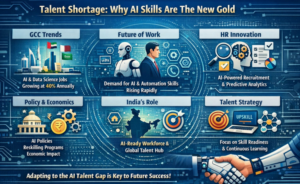
Many multinational companies are
expanding their GCC operations in India because of its cost advantage, technical talent base, and
innovation capacity.
HR startups that provide smart hiring tools, workforce analytics, and skill development platforms
will play a major role in solving this challenge.
In conclusion, AI skills are the new gold because they power growth, efficiency, and innovation.
Businesses must rethink how they hire, train, and retain talent. Graduates must prepare for a
digital-first world. And HR leaders must combine technology with human insight to build futureready organizations. The companies that act today will lead tomorrow’s AI-driven economy.