
Global Capability Centers are evolving faster than ever, and workforce planning is
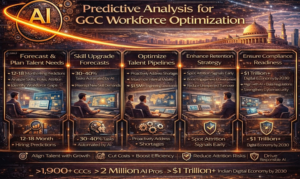
becoming more data-driven and strategic. In India alone, there are 1,900+ GCCs
employing over 2 million professionals, and many of them are no longer just operational
hubs. They are innovation centers driving AI, analytics, cybersecurity, and digital
engineering for global enterprises.
Traditionally, workforce planning was reactive. Companies hired when demand increased
and downsized when projects ended. But today’s business environment is too dynamic for
that approach. With AI + automation transforming operations and global markets shifting
quickly, GCC leaders need to anticipate skill gaps 12–18 months in advance.

One of the most important GCC trends is the shift from volume hiring to smart hiring.
Studies suggest that nearly 30–40% of repetitive tasks in enterprise environments can be
automated. This changes the type of talent required
Predictive analysis helps leaders understand which roles
will evolve, which will shrink, and which new roles will emerge. For example, demand for
AI-related roles has grown significantly over the past few years, and organizations that
invest early in upskilling programs see 20–30% productivity improvements. Workforce
optimization is not about reducing headcount; it is about aligning talent with future value
creation.
Modern HR tech platforms use AI-driven dashboards to monitor employee performance,
engagement, learning progress, and skill acquisition. These systems can detect patterns
such as rising attrition risks, emerging skill gaps, or leadership pipeline weaknesses. For
HR startups, this presents a strong opportunity. Tools that combine predictive hiring, skill
mapping, and workforce analytics can directly support GCC leaders in building resilient
and agile teams.
Predictive insights allow GCC leaders to align talent strategy with enterprise growth
plans, ensuring that the right skills are available when global projects scale. Many
multinational companies are assigning global product mandates and AI initiatives to their
Indian GCCs. This means workforce decisions made in India can directly impact global
performance.
AI + automation are not just tools for operational efficiency; they are strategic enablers
of smarter workforce planning. Predictive analysis turns workforce data into actionable
intelligence. It helps organizations reduce unexpected talent shortages, improve
retention, optimize costs, and prepare for the future of work.
In simple terms, predictive analysis allows GCCs to move from guessing to knowing. It
enables leaders to build agile, future-ready teams while strengthening India’s position as
a global enterprise powerhouse. For B2B leaders and HR startups, investing in predictive
workforce optimization is no longer optional. It is a strategic necessity for sustainable
growth in the AI-driven economy.