

One of the most visible GCC trends is the shift from task execution to value creation. Earlier,
many roles focused on repetitive operations such as data processing, reporting, and compliance
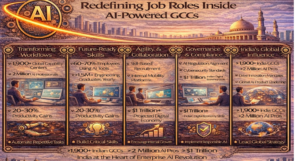
checks. Today, AI + automation tools can handle 30–40% of repetitive enterprise tasks, freeing
employees to focus on analysis, innovation, and strategic thinking. This does not mean fewer jobs;
it means smarter jobs.
They have evolved into
innovation engines that power global enterprises. In India alone, there are 1,900+ GCCs employing
over 2 million professionals, and a growing number of them are leading AI, automation, and digital
transformation mandates.
Companies are shifting from role-based
hiring to skill-based hiring. Instead of recruiting for fixed positions, they look for adaptable talent
with strong learning agility. HR startups have a strong opportunity to support this shift.
mobility systems are helping enterprises redesign workforce structures for the AI era.
This is where HR innovation plays a powerful role. Traditional job descriptions are becoming
outdated quickly because skills evolve faster than titles. Companies are shifting from role-based
hiring to skill-based hiring. Instead of recruiting for fixed positions, they look for adaptable talent
with strong learning agility. HR startups have a strong opportunity to support this shift.
Talent strategy inside GCCs is also becoming more forward-looking. India produces more than 1.5
million engineering graduates every year, offering a vast technical talent pool. However,
enterprises are no longer focusing only on hiring at scale. They are investing in structured
upskilling programs, AI certifications, cross-functional exposure, and leadership development
initiatives.
Organizations that reskill their workforce effectively can achieve 20–30% productivity
improvements while reducing dependency on repetitive roles. Continuous learning is becoming a
competitive advantage rather than an optional benefit.
Multinational companies are increasingly assigning global AI mandates and product ownership
responsibilities to their Indian GCCs. Decision-making authority is expanding, and Indian teams
are influencing global customer experiences and business outcomes
AI + automation are not replacing professionals; they are redefining their contribution. Roles are
becoming more dynamic, interdisciplinary, and innovation-driven. Employees are expected to
interpret data insights, supervise intelligent systems, and collaborate across geographies.
The GCC workforce is becoming a core driver of enterprise growth, not just an operational
extension.
In simple terms, AI-powered GCCs are building the workplace of the future today. By redefining
job roles around intelligence, creativity, and strategic value, they are strengthening India’s position
as a global innovation hub. The organizations that embrace this shift with clarity and purpose will
not only stay competitive but will shape the global enterprise landscape for years to come.