
The pharmaceutical and life sciences industry is going through a major transformation, and
Global Capability Centers (GCCs) in India are at the heart of this change. What was once limited
to basic research support and back-office operations has now evolved into high-value innovation
hubs.
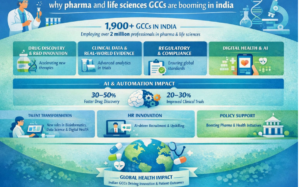
One of the biggest GCC trends in this sector is the shift from support functions to core business
capabilities. Earlier, pharma GCCs handled tasks like documentation, finance, and IT support.
Today, they are deeply involved in clinical trials, pharmacovigilance, bioinformatics, and realworld evidence analysis.
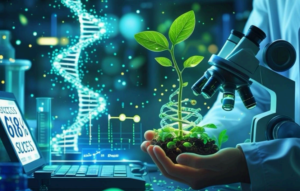
AI + automation are playing a major role in this growth. The pharma industry generates vast
amounts of data from clinical trials, patient records, and research studies. AI tools are helping
analyze this data faster and more accurately. Studies show that AI can reduce drug discovery
timelines by 30–50% and improve clinical trial efficiency by 20–30%.
Professionals are now expected to work at the intersection of healthcare and technology,
combining domain knowledge with skills in AI, data science, and digital tools. For graduates, this
creates exciting opportunities to build careers in emerging areas such as digital therapeutics,
clinical analytics, and AI-driven research. It also means continuous learning is essential to stay
relevant.
The pharma and life sciences sector requires highly skilled professionals with expertise in both
science and technology. HR teams are using AI-powered recruitment tools to identify niche
talent, predictive analytics to forecast hiring needs, and digital learning platforms to upskill
employees.
Companies are increasingly focusing on building hybrid skill sets that combine scientific
knowledge with digital expertise. The demand for roles in bioinformatics, data science,
regulatory technology, and clinical analytics is growing at 15–20% annually in many GCCs.
Global regulations around drug safety, data privacy, and clinical compliance are becoming
stricter. GCCs play a crucial role in ensuring that companies meet these regulatory requirements
while maintaining operational efficiency. India’s healthcare and digital infrastructure continues
to improve, making it an attractive destination for global pharma companies.
Many multinational pharmaceutical companies are expanding their GCC presence in India and
assigning them end-to-end responsibilities in research, analytics, and digital transformation.
These centers are not just supporting global operations; they are shaping the future of
healthcare innovation.
In conclusion, the growth of pharma and life sciences GCCs in India is driven by a powerful
combination of AI + automation, strong talent availability, supportive policies, and evolving
business needs, this sector offers significant opportunities to build solutions that support talent
development, digital transformation, and regulatory compliance.