

The energy and renewable sector is going through a major transformation, and Global
Capability Centers (GCCs) are quietly becoming a key driver behind it. As the world shifts
toward cleaner energy, companies are investing in digital technologies, analytics, and
automation to improve efficiency and sustainability. India has emerged as a strong hub for
this transformation, with 1,900+ GCCs employing over 2 million professionals.
Earlier, GCCs in energy companies mainly handled back-office functions such as billing,
customer support, and basic IT services. Today, they are involved in advanced areas like
smart grid analytics, renewable energy forecasting, carbon tracking, and energy trading
platforms.
Studies suggest that 30–40% of operational processes in energy companies can be
automated, leading to 20–25% efficiency improvements. GCCs in India are increasingly
managing these AI-driven systems for global operations, making them strategic contributors
rather than support units.
Energy-focused GCCs are using AI-powered hiring platforms to identify candidates with
niche skills in renewables, data analytics, and AI. Digital learning platforms are helping
employees upskill in areas such as clean energy technologies, carbon accounting, and
automation tools. HR teams are also focusing on building strong employee value propositions
around sustainability.
As automation takes over routine tasks, employees are shifting toward roles that require
analytical thinking, digital skills, and sustainability awareness. Professionals are now
expected to understand both technology and energy systems. New roles such as renewable
energy analysts, ESG data specialists, smart grid engineers, and energy AI modelers are
emerging.
India has committed to ambitious renewable energy targets, including achieving 500 GW of
non-fossil fuel capacity by 2030. Globally, governments and enterprises are increasing
investments in clean energy, creating strong demand for digital and analytical capabilities.
Regulations around carbon emissions, sustainability reporting, and energy efficiency are also
becoming stricter, pushing companies to adopt advanced technologies and data-driven
decision-making.
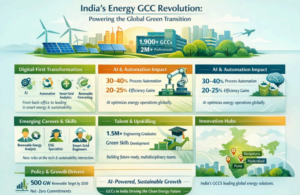
Cities like Bengaluru, Hyderabad, and Pune are becoming key hubs for energy innovation.
These centers are not just supporting operations; they are helping companies design
sustainable strategies, optimize energy usage, and meet global climate goals.
AI + automation are enabling energy companies to move faster toward a cleaner future, but
they also require strong governance and skilled talent. GCCs provide the perfect
environment to combine technology, talent, and scale. For B2B leaders and HR startups, the
opportunity lies in supporting this ecosystem with the right tools, talent strategies, and
innovation frameworks.
In conclusion, energy and renewable GCC trends reflect a larger shift toward sustainable,
technology-driven growth. With AI-powered operations, evolving talent strategies, and strong
policy support, GCCs in India are becoming central to the global energy transition. As the
world moves toward cleaner energy, these centers will play a critical role in shaping a more
efficient, resilient, and sustainable future.