

Finding the right decision-makers to lead modern enterprises has transformed from a
traditional executive search into a high-stakes strategic mandate. Today, global boardrooms
are looking beyond routine pedigree, placing a massive premium on agile visionaries who can
navigate digital transformation, economic headwinds, and rapid organizational shifts. For
emerging HR startups and corporate talent strategists, understanding these shifts is no longer
optional—it is the foundational playbook for building resilient, future-ready leadership teams.
The massive rise of Global Capability Centers (GCCs) in India serves as a perfect lens for this
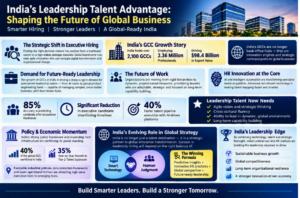
transformation. India now hosts over 2,100 GCCs employing 2.36 million professionals and
driving nearly $98.4 billion in export value. These hubs are no longer mere back-office
operational sites; they have evolved into primary innovation engines and strategic command
posts owning global product roadmaps and full revenue mandates. This shift has triggered a
sharp surge in demand for specialized leadership talent—heads of AI, global product
engineering leads, and enterprise risk officers—capable of managing complex, cross-border
business units directly from Indian hubs.

This evolution closely aligns with forward-looking future-of-work thinking, where traditional
organizational hierarchies are giving way to dynamic, project-based network structures.
Modern executive talent strategies prioritize leaders who demonstrate high adaptability and
long-term capability building rather than static functional management. Forward-thinking
talent acquisition models focus heavily on skills-first assessment frameworks, ensuring that
incoming executives possess the cross-cultural fluency and strategic agility needed to lead
dispersed global workforces effectively.
At the heart of this talent transformation is groundbreaking HR innovation, largely powered
by AI and intelligent automation. Advanced recruitment technology is revolutionizing how
organizations source, evaluate, and retain executive talent. Intelligent platform algorithms
now streamline talent mapping and shorten executive candidate shortlisting timelines
significantly. Meanwhile, predictive analytics engines evaluate offer-acceptance likelihoods
with up to 85% accuracy, helping startup talent agencies and enterprise HR teams minimize
dropouts and optimize candidate engagement during critical hiring cycles.
India’s strengthening data protection frameworks, favorable industrial policies,
and expanding infrastructure in Tier-1 and Tier-2 technology hubs have solidified the
country’s strategic standing on the world stage. Consequently, India accounts for 40% of the
global GCC workforce, with Tier-2 talent expansion growing at an impressive 35% yearover-year. This rapid decentralization reflects how economic stability, lower operational
friction, and deep regional talent pools are pulling high-value executive positions toward
emerging business hubs.
Ultimately, India’s evolving role in global enterprise strategy highlights a fundamental reality
for B2B leaders and HR startups: successful leadership hiring requires a seamless balance
between smart technology and human judgment. While automation optimizes pipeline
efficiency, human empathy and strategic calibration remain vital to securing leaders who
align with company culture. Organizations that combine predictive talent insights, innovative
HR practices, and a global perspective will secure the leadership required to drive long-term
business growth.