

India’s transformation into a global technology and business powerhouse is entering an exciting new
phase.While major metropolitan hubs like Bengaluru, Mumbai, and NCR laid the foundation, a major
geographic shift is underway toward emerging urban markets. Cities like Ahmedabad, Jaipur,
Coimbatore, Kochi, Indore, and Chandigarh are fast becoming vibrant innovation ecosystems. Driven
by rising real estate expenses and talent saturation in tier-one metros, global enterprises are
embracing these secondary hubs to build resilient, distributed operations.This decentralization
represents a fundamental evolution in how multinational organizations view talent, infrastructure, and
operational efficiency.

A major catalyst behind this geographic expansion is the rapid change in Global Capability Center
trends. As India’s GCC market scales toward an estimated $105 billion market valuation by 2030,
multinational companies are adopting multi-hub and hub-and-spoke models. Rather than placing all
operations in saturated primary metros, organizations establish satellite centers in emerging cities.
These tier-two centers deliver 25% to 50% operational cost savings alongside 40% to 60% lower
real estate expenses.
Future-of-work thinking in these emerging hubs centers on sustainable employee engagement and
superior quality of life.The surge in flexible co-working spaces and high-grade office parks enables
enterprise teams to launch operations rapidly without heavy capital investment. Shorter daily
commutes, lower living costs, and modern hybrid work setups give professionals in tier-two cities a
healthier work-life balance. For businesses, this translates into significantly higher workforce stability,
with employee attrition rates dropping to 15% to 18% compared to 25% or higher in tier-one
metros.
India’s secondary cities produce hundreds of thousands of qualified engineering and
management graduates every year, offering an abundant, highly motivated local talent pool. By
establishing centers closer to where talent naturally originates, companies avoid regional brain drain
and build long-term loyalty. Furthermore, targeted upskilling initiatives in emerging tech domains allow
local professionals to quickly transition into complex software development, cloud infrastructure, and
enterprise support roles.
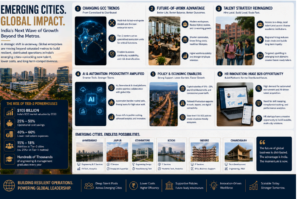
Automated tools, Generative AI models, and cloud-based workflow platforms
allow distributed teams in smaller cities to collaborate seamlessly with global headquarters. As routine
administrative and transactional tasks become automated, professionals in tier-two hubs are
empowered to focus on high-value problem solving, advanced analytics, and domain-specific
innovation.This shift elevates regional hubs from basic cost-saving units to key drivers of corporate
digital transformation.
For HR startups and HR tech innovators, the rise of tier-two markets presents an unparalleled B2B
growth opportunity. Managing distributed workforces across multiple geographical nodes creates
urgent demand for modern human resources software. Emerging enterprise hubs actively seek
automated recruitment engines, AI-driven skill mapping, regional compliance tracking, and remote
performance analytics. HR startups that build scalable platforms tailored for multi-city talent
management will find eager enterprise customers looking to optimize their expanding footprints.