
The workforce inside Global Capability Centres (GCCs) is changing faster than ever before. Over
the past decade, GCCs have evolved from being operational support centres into strategic hubs
for innovation, product development, artificial intelligence, cybersecurity, finance, engineering,
and enterprise transformation.For HR startups, business leaders, and multinational organisations,
understanding what this future workforce will look like is essential for making the right investment
decisions today
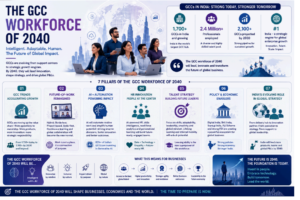
Today, the country hosts more than 1,700
GCCs, employing approximately 2.4 million professionals across multiple industries. Industry
forecasts suggest that India could have over 2,100 GCCs by 2030, with continued expansion
expected throughout the following decade. As global enterprises increase investments in India,
GCCs will become even more responsible for product ownership, AI research, digital engineering,
customer experience, financial transformation, and strategic business leadership. By 2040, many
of these centres are likely to manage complete global business functions rather than supporting
headquarters from a distance.

Artificial Intelligence and automation will fundamentally reshape the future workforce. Reports
indicate that over 83% of India’s GCCs are already investing in Generative AI, and this adoption
is expected to become universal over the coming years. AI will automate repetitive administrative
work, generate software code, analyse large volumes of business data, improve cybersecurity,
and support strategic decision-making. Rather than reducing the importance of people,
automation will increase the value of uniquely human capabilities such as creativity, critical
thinking, leadership, emotional intelligence, and problem-solving
Employees will continuously move between different projects, business functions, and
technologies throughout their careers. Learning will become an everyday activity rather than
something that happens only during formal training programmes. GCC professionals will
increasingly work with colleagues, customers, and partners across continents, making
adaptability, communication, and cross-cultural collaboration essential skills. Organisations that
embrace continuous learning will be far better prepared for the workforce of 2040.
Future HR teams will rely heavily on AI-powered recruitment, predictive workforce planning, skills
intelligence, personalised learning platforms, employee experience technologies, and workforce
analytics. Instead of focusing mainly on recruitment and administration, HR will become a
strategic business function responsible for building future-ready organisations. HR startups will
have enormous opportunities to develop platforms that identify emerging skills, recommend
personalised career paths, predict talent shortages, improve employee engagement, and
strengthen organisational culture.
Companies will no longer compete only for technical expertise. They will compete for individuals
who combine digital capabilities with leadership, creativity, commercial understanding,
adaptability, and global collaboration skills. Continuous upskilling, internal mobility,
multidisciplinary learning, and leadership development will become essential parts of workforce
planning. Organisations that create strong learning cultures will attract and retain the best talent,
while those that fail to invest in employee development may struggle to remain competitive.
Today’s GCCs already contribute to AI research, product development, engineering excellence,
cybersecurity, customer experience, and enterprise transformation. In the coming years, Indiabased leaders are likely to take on greater responsibility for global business strategy, innovation,
commercial decision-making, and executive leadership. Rather than being viewed as support
centres, GCCs will increasingly function as global headquarters for specific products,
technologies, and business functions. This shift reflects the growing confidence multinational
organisations have in India’s talent, leadership, and innovation capabilities.