

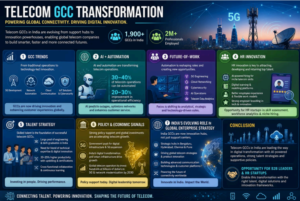
The telecom industry is going through a major digital transformation, and Global Capability Centers
(GCCs) in India are becoming a key force behind this change. As telecom companies worldwide expand
their 5G networks, improve digital connectivity, and invest in cloud-based services, the demand for
advanced technology and skilled talent is rising rapidly. India has emerged as a strong destination for
telecom GCCs, with 1,900+ GCCs employing over 2 million professionals.
One of the biggest GCC trends in the telecom sector is the shift from traditional operational support to
technology-led innovation. Earlier, telecom GCCs mainly handled customer support, billing systems,
and network maintenance services. Today, these centers are deeply involved in advanced areas such as
5G development, network automation, cloud communication platforms, IoT solutions, and
cybersecurity management.

The growth of AI + automation is playing a major role in this transformation. Telecom companies are
using artificial intelligence and machine learning to optimize network performance, predict outages, and
improve customer service. AI-powered systems can detect network issues before they affect users,
helping companies reduce downtime and improve service quality. Studies suggest that 30–40% of
telecom operations can be automated, resulting in 20–30% improvement in operational efficiency.
As automation takes over repetitive operational tasks, employees are expected to focus more on
analytical, strategic, and technology-driven roles. New job opportunities are emerging in areas such as
5G engineering, cloud networking, cybersecurity, AI operations, and telecom data
analytics. For graduates, this creates exciting career opportunities, but it also highlights the
importance of continuously learning new digital and technical skills to stay relevant in the industry.
Telecom-focused GCCs are increasingly using AI-powered hiring platforms to identify candidates with
specialized skills in networking, cloud computing, and cybersecurity. Digital learning and reskilling
platforms are helping employees upskill in emerging technologies like 5G, AI, and network
automation. HR teams are also focusing on improving employee experience, flexible work models,
and strong employer branding to attract top technology talent.
Telecom companies now need professionals who can combine
technical expertise with problem-solving and digital innovation skills. Organizations that invest in
structured upskilling and certification programs often achieve 20–25% higher productivity and
faster project execution. Cross-functional collaboration and continuous learning are becoming central to
workforce development strategies.
India’s push toward digital transformation and smart infrastructure is increasing investments in
telecom technologies. Globally, telecom operators are expected to invest hundreds of billions of
dollars in 5G and network modernization by 2030, creating significant demand for engineering,
analytics, and automation capabilities. These developments make India an attractive location for
telecom innovation and operations.
In conclusion, the telecom GCC transformation reflects a larger shift toward technology-driven growth
and digital innovation. With strong AI-powered capabilities, evolving talent strategies, and supportive
policy initiatives, telecom GCCs in India are becoming central to the global telecom ecosystem. As the telecom industry continues to evolve with 5G and
future connectivity technologies, India’s GCCs will remain a major driver of global telecom innovation
and business growth.