

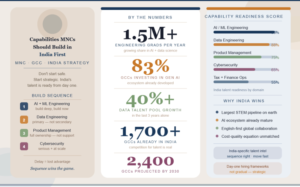
IThe first capability that MNCs should build in India, and build seriously, is artificial intelligence
and machine learning engineering. The depth of AI talent available in India’s major technology
hubs is genuinely world-class, and the competition for it is already intense. India produces over
1.5 million engineering graduates annually, and a significant and growing proportion of those
graduates are specialising in AI, data science, and machine learning.
India has a substantial pool of experienced AI professionals — engineers with
five to ten years of applied experience in building, deploying, and governing AI systems at
enterprise scale. Over 83 percent of India-based GCCs are already investing in Generative AI,
which means the ecosystem of tools, communities, and expertise around AI work in India is more
developed than in most other markets globally. MNCs that delay building their AI capability in
India will find themselves competing for a finite talent pool against organisations that moved
earlier and built deeper.

Data engineering and analytics is the second capability where India should be the primary build
location rather than a secondary consideration. The combination of strong mathematical
foundations in India’s education system, deep familiarity with large-scale data infrastructure, and
a growing ecosystem of data engineering talent makes India the most compelling location in the
world for building the data backbone that modern enterprise operations depend on.
Global enterprises running on real-time analytics, AI-driven decision-making, and cloud-first
data architecture need large, capable data engineering teams — and India can provide those
teams at a quality and scale that no competing market can match. India’s data and analytics
talent pool has grown by over 40 percent in the last three years, reflecting the intense demand
from GCCs building this capability.
Product management and digital product development is the third area where MNCs consistently
underestimate what India can deliver from the outset. The notion that product strategy and
ownership must remain with teams in headquarters is a legacy assumption that the best GCC
operators have already discarded. Indian product managers who have grown up in the startup
ecosystem, worked across global product teams, and developed deep user intuition for both
Indian and global markets are among the most capable in the world.
Cybersecurity capability is another area where India should be an MNC’s first choice rather than
a supporting location. The demand for cloud security architects, threat intelligence analysts,
identity and access management specialists, and security operations centre professionals in
India is intense, but the supply is deep enough to build serious capability at scale if organisations
move with intention. With cyber threats increasing in frequency and sophistication globally, and
with regulatory requirements around data protection tightening across every major jurisdiction,
building a robust security function in India early is one of the most defensible investments an
MNC can make.
For HR startups and talent strategy leaders, the sequencing question is a commercial opportunity
as much as it is a strategic one. MNCs building their first serious India GCC operations need
partners who can help them identify where the talent is, what it costs, how to attract it, and how
to retain it across these high-priority capability areas. The organisations that provide that
intelligence — with the specificity, the India context, and the forward-looking perspective that
generic HR tools cannot offer — will be the ones earning the most trusted positions in the GCC
talent ecosystem over the decade ahead.