

The first generation of GCCs focused mainly on reducing operational costs through IT support,
finance, customer service, and business process management. Today’s GCCs look nothing like
those early models. They are leading product engineering, artificial intelligence, cloud computing,
cybersecurity, digital transformation, analytics, and enterprise innovation. Rather than supporting
business functions, they are helping shape business strategy.
One of the strongest GCC trends today is expansion into high-value capabilities. Global
companies are investing in India not because they are searching for lower costs but because they
need access to world-class talent, faster innovation, and scalable digital capabilities. Many
multinational organisations are establishing centres focused entirely on research and
development, AI engineering, sustainability, product management, and enterprise transformation.
This represents a significant evolution from operational excellence to strategic leadership.

Artificial intelligence and automation are creating another wave of opportunity instead of slowing
GCC growth. While AI automates repetitive work, it also increases demand for highly skilled
professionals who can build intelligent systems, manage enterprise data, strengthen
cybersecurity, and solve complex business problems. Modern GCCs are becoming AI innovation
hubs where engineers, data scientists, product managers, and business leaders collaborate to
create enterprise-wide digital solutions. Instead of replacing talent, AI is increasing the value of
skilled professionals by allowing them to focus on innovation, strategy, and customer experience.
Organisations no longer
compete only for technical skills—they compete for leadership, adaptability, creativity, and
continuous learning. As GCC responsibilities expand, companies require professionals who can
manage global stakeholders, lead digital transformation, and navigate rapidly changing
technologies. Skills-based hiring, leadership development, internal mobility, and continuous
upskilling are becoming essential parts of workforce planning
For HR startups, India’s GCC expansion creates enormous opportunities for innovation.
Enterprises need AI-powered recruitment platforms, workforce analytics, skills intelligence,
employee engagement technologies, and learning solutions that help build future-ready
organisations. Recruitment is evolving from filling vacancies to identifying future leaders and
predicting emerging skill requirements. HR startups that combine technology with workforce
insights will become valuable strategic partners as enterprises continue expanding their GCC
operations.
 I
I
nstead of executing instructions from overseas headquarters, India-based GCCs are
increasingly influencing enterprise decisions, leading global innovation programmes, driving AI
research, and shaping customer experiences across international markets. Leadership
responsibilities are becoming more distributed, and India’s contribution continues to grow
beyond operational delivery. Many global organisations now view their India operations as centres
of innovation, resilience, and long-term business growth rather than simply support functions.
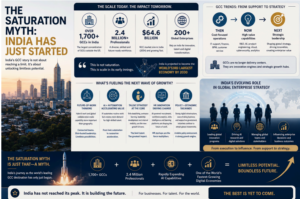
The belief that India’s GCC market is reaching saturation overlooks the fundamental shift taking
place across global business. Growth is no longer about opening more offices—it is about
building smarter enterprises powered by innovation, talent, and technology. With over 1,700
GCCs, 2.4 million professionals, rapidly expanding AI capabilities, and one of the world’s fastestgrowing digital economies, India is only beginning its next chapter.