


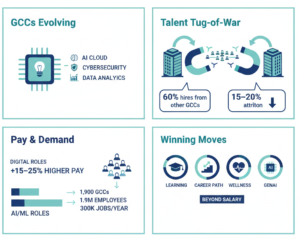
The new “war for talent” in GCCs, especially in India, is happening because these centers are no longer just about saving costs.They are now building serious teams in areas like AI, cybersecurity, and data analytics. Since these skills are in high demand, companies are often hiring by pulling talent from other GCCs rather than finding fresh candidates. By late 2025, more than 60% of new hires are expected to come this way, which is pushing attrition levels to around 15–20%. In simple terms, everyone is chasing the same skilled people, making talent harder to keep and more valuable than ever.
GCCs in India are in a serious race to hire the best people, and it’s much more intense than in traditional IT companies. These centers are chasing skills like AI, cloud, and cybersecurity, and they’re willing to pay more to get them. For regular tech roles, salaries are often 15–25% higher, and for advanced AI or machine learning jobs, the pay can jump by 30–40%.With around 1,900 GCCs employing 1.9 million people and adding nearly 300,000 new jobs every year, hiring is happening four times faster than in IT services. Because of this, about 60% of new hires are coming from other GCCs, turning the job market into a real talent war.
The crunch hits hardest in hot skills. GCCs created 100,000+ tech jobs in FY24-25 while IT added just 25,000-40,000, with Bengaluru and Hyderabad leading demand. Offer acceptance rates shine at 60- 70% thanks to better perks like hybrid work and upskilling, but attrition lingers at 13-15%. Only 25-30% focus employer branding, leaving many scrambling as mid-sized GCCs drive 18-27% workforce growth. Graduates snag 15-20% salary jumps in AI roles over IT peers.
One of the biggest changes is where talent is coming from. Instead of hiring fresh candidates, many GCCs are recruiting experienced professionals from other GCCs.Today, around 60% of new hires in advanced roles are poached from rival centers. This has pushed attrition levels to 15–20%, especially in fast-growing teams. For businesses, this means higher hiring costs and the constant risk of losing critical skills. For graduates, it shows how valuable the right skills have become and how quickly careers can move when demand is high.
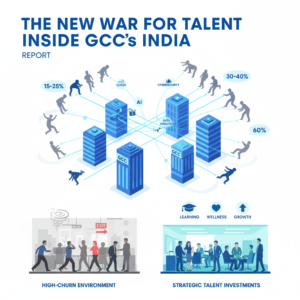
To stay competitive, companies are rethinking their talent strategy. Pay is one lever, but not the only one. GCCs are offering 15–25% higher salaries for standard digital roles and 30–40% premiums for niche AI and machine learning skills. At the same time, leaders are focusing more on long-term retention by investing in learning programs, internal mobility, and clear career paths. Instead of just hiring ready-made experts, many GCCs are building talent internally through structured upskilling and reskilling programs, helping employees grow into future roles.
Tier-2 cities like Coimbatore are helping ease the talent crunch by growing hiring at around 8–9%, giving companies access to fresh talent outside crowded metros. While these cities still need better infrastructure, they are becoming strong alternatives. At the same time, 83% of GCCs are investing in GenAI, and each center has nearly 790 open roles on average, which is about double what companies in the US are hiring for. To attract and keep people, leaders are offering better benefits, wellness support, and role rotations so employees don’t feel stuck. Even with a 20% hiring gap compared to IT services, this intense competition clearly shows where the future of high-value digital work is heading.
HR innovation is playing a big role in this shift. Modern GCCs are using data to predict attrition, improve hiring decisions, and design better employee experiences. Hybrid work, flexible hours, and wellness support are now basic expectations, not perks. HR teams are also working closely with business leaders to plan workforce needs early, rather than reacting when gaps appear.This closer alignment helps GCCs scale faster without burning out their people.
The war for talent inside GCCs is about more than salaries. It’s about building workplaces where skilled people want to stay, learn, and grow. For B2B leaders, winning this war means treating talent as a longterm investment. For graduates, it means strong opportunities in GCCs that value skills, learning, and meaningful work in a highly competitive global environment.
In simple terms, GCCs in India are no longer just low-cost support centers—they are competing for the best talent in the market. As hiring speeds up and skills like AI and cybersecurity become harder to find, companies need smarter talent strategies, not just higher salaries. For graduates, this shift means more opportunities, faster career growth, and a chance to work on high-impact global roles right from India.