

GCCs are now setting team-based goals that allow space for new ideas while staying aligned with
global business needs. Data helps show which skills matter most, so training is focused on what really
adds value. Instead of just judging performance, leaders act as coaches, guiding teams, building trust,
and helping people grow in the right roles.
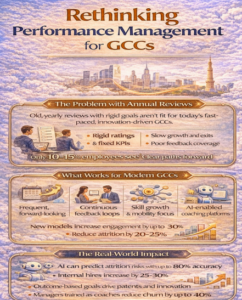
Modern GCCs are moving away from once-a-year reviews and toward regular, open conversations
between managers and team members. These quick check-ins help people see how they are doing,
get feedback on time, and fix problems before they grow. Simple digital tools now track daily wins
and progress linked to big goals, not just hours worked. This makes performance feel fairer and
more motivating, and it can boost engagement and productivity by 20–30%

HR innovation plays a major role here. AI-powered performance tools now help managers track
goals, give real-time feedback, and spot early signs of burnout or disengagement. AI systems can
analyze work patterns and predict attrition risks with up to 80% accuracy, allowing HR teams to step
in early. This moves performance management from being reactive to proactive.
From a talent strategy point of view, modern performance management is tightly linked to learning
and internal mobility. High-performing GCCs link performance data to learning platforms, so employees
automatically get skill suggestions based on their goals. Companies using this model fill 25–30% of
open roles internally, reducing hiring costs and improving loyalty.
AI and automation also reduce manager overload. Automated check ins, sentiment analysis, and
performance dashboards help managers spend less time on paperwork and more time coaching. This
matters because manager quality is one of the biggest drivers of retention. Studies show teams with
strong managers have up to 40% lower churn.
GCCs are no longer back
offices they are co-owners of global outcomes. Performance management must reflect this
responsibility. A real-world example is a Hyderabad-based GCC that moved to outcome-based goals
for its AI team. Within 18 months, the team filed multiple global patents and became a core innovation
partner for its headquarters.
Government programs around digital skills, AI adoption, and hybrid work have pushed GCCs to
become innovation hubs rather than cost centers. As global companies rely more on India for product
development, data science, and AI work, performance is measured not just by output, but by impact
and innovation.
In simple terms, rethinking performance management is about trusting people, supporting
growth, and measuring what truly matters. GCCs that get this right build stronger cultures, retain
top talent, and deliver better results globally. For HR startups and B2B leaders, this is not just an HR
upgrade it’s a competitive advantage.