

Capability benchmarking has become a critical tool for Global Capability Centers (GCCs) that want to
move from execution hubs to global value creators. As India hosts over 1,900 GCCs employing
nearly 1.9 million professionals. Benchmarking helps
answer this question by measuring talent capabilities against global standards, industry peers, and
future business needs.
With rapid shifts in AI, cloud, data, and
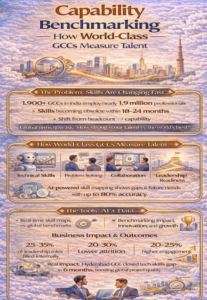
automation, skills can become outdated within 18–24 months. World-class GCCs now benchmark
capabilities across technical depth, problem-solving ability, collaboration, leadership readiness, and
learning speed. This shift reflects a larger GCC trend where performance is defined by impact and
innovation, not just output.

HR innovation plays a major role in modern capability benchmarking. AI-powered talent platforms
analyze skills from resumes, certifications, project work, and performance data to create real-time skill
maps. These tools can identify skill gaps and future needs with up to 80% accuracy, helping leaders
plan before shortages hurt delivery.
AI and automation are also changing how performance and capability are measured. Instead of
relying on manager opinions alone, modern systems track outcomes, learning progress, collaboration
patterns, and even innovation contributions. Studies show organizations using data-led benchmarking see 20–25%
higher engagement, as employees trust the process more.
As more global firms shift product ownership and innovation work to India, benchmarking ensures
Indian teams meet and exceed global expectations. Cities like Bengaluru, Hyderabad, and Pune have
become global capability benchmarks themselves, attracting complex work because of strong talent
maturity.
Goals now emphasize team outcomes over individual scores, with flexibility for new opportunities like AI
projects. Skills assessments guide personalized training, aligning talent with future needs. Leaders act
as coaches, offering guidance and celebrating wins to build trust and engagement across global
squads.
Companies that do this well fill 25–35% of leadership roles
internally and reduce attrition by 20–30%, because employees see clear growth paths. Graduates
especially benefit when expectations are transparent and skills, not favoritism, drive progress.
India’s evolving role in global enterprise strategy makes capability benchmarking essential. GCCs are
now responsible for core platforms, global analytics,
against Silicon Valley standards. After identifying gaps in business storytelling, the company added
training and cross functional exposure.
In simple terms, capability benchmarking helps GCCs know where they stand, where they are
headed, and how to get there faster. For HR startups, this opens opportunities to build smarter tools
for skills intelligence, workforce planning, and continuous learning. For business leaders, benchmarking
turns talent from a risk into a competitive advantage.