

he manufacturing industry is entering a new era with the rise of Industry 4.0, where technologies like
artificial intelligence, automation, IoT, and data analytics are transforming how factories operate.
Global Capability Centers (GCCs) in India are becoming key innovation hubs in this transformation,
helping global manufacturers improve efficiency, reduce costs, and build smarter operations. India has
emerged as a preferred destination for these GCCs, with 1,900+ GCCs employing over 2 million
professionals.
The role of AI + automation in Manufacturing 4.0 is especially transformative. Artificial intelligence
and machine learning are helping manufacturers optimize production planning, improve quality control,
and reduce machine downtime. Automation and robotics are also improving speed and precision in
factory operations. Studies suggest that 30–50% of manufacturing processes can be automated,
leading to 20–30% improvement in productivity and operational efficiency.
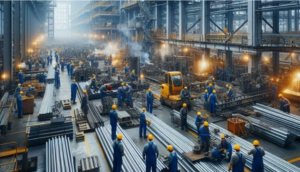
As smart
factories become more common, the demand for digital and analytical skills is increasing rapidly.
Employees are expected to work alongside advanced technologies such as robotics, IoT systems, and
AI platforms. New roles like smart factory engineers, industrial data analysts, automation specialists,
and digital operations managers are emerging across the sector.
Manufacturing-focused GCCs are using AI-powered recruitment tools to identify candidates with niche
skills in automation, robotics, and industrial analytics. Digital learning platforms are helping employees
upskill in areas such as IoT systems, cloud manufacturing, and data-driven operations. HR teams are
also focusing on employee engagement, flexible learning models, and strong employer branding
around innovation and sustainability.
Rising global demand for supply chain resilience and operational efficiency is pushing manufacturers
to adopt advanced technologies at scale. At the same time, global manufacturing companies are
increasing investments in automation and industrial AI, creating strong demand for innovation-led GCC
capabilities. These factors are strengthening India’s position as a global manufacturing and
engineering hub.

Many multinational manufacturers are setting up or expanding their GCCs in cities like Bengaluru,
Pune, Chennai, Hyderabad, and Gurugram to leverage India’s skilled workforce and digital ecosystem.
These centers are no longer just support functions; they are becoming innovation hubs that drive
global product development, supply chain transformation, and factory automation strategies.
From
designing smart manufacturing systems to managing advanced analytics platforms, India-based GCCs
are playing a major role in shaping the future of manufacturing worldwide.With strong AI-powered capabilities, evolving talent strategies, and supportive
policy initiatives, GCCs in India are becoming central to global manufacturing transformation. As
manufacturing becomes more connected, automated, and data-driven, India’s GCCs will continue to
play a critical role in building smarter and more resilient global industries.