
Across the world, GCCs are shifting from traditional classroom learning to continuous, workintegrated learning models. According to industry estimates, over 65% of skills used in today’s
jobs will change by 2030. This means companies can no longer rely on static job descriptions or
annual training calendars. Instead, learning must be embedded into daily work, projects, and career
paths. For HR startups and talent leaders, this shift opens a major opportunity to redesign how learning
is delivered and measured

AI and automation are reshaping how learning happens. AI-driven learning platforms can now
map employee skills, identify gaps, and recommend personalized learning paths in real time. Research
shows that companies using AI-based skill mapping improve workforce readiness by 25–30% faster
than those using manual methods.
From an HR innovation perspective, learning ecosystems also change the role of managers. Leaders
are no longer just performance evaluators; they become coaches and capability builders. This
approach improves engagement and retention. Studies indicate that teams with strong learning
cultures experience 20–25% lower attrition, a critical metric for GCCs operating in competitive talent
markets like India.
A modern learning ecosystem connects business strategy, talent strategy, and technology.
Highvalue GCC roles today demand skills in data analytics, AI model operations, cybersecurity, product
thinking, and stakeholder management. For example, a global fintech firm’s GCC in Bengaluru moved
from basic IT support to advanced risk analytics within three years. This shift was possible because
learning was aligned directly with business outcomes, not just employee interest.
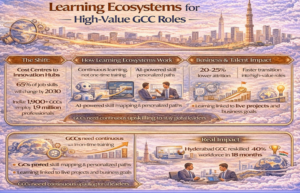
Today, India hosts 1,900+ GCCs employing nearly 1.9 million professionals, and this number
continues to grow. Learning ecosystems help GCCs stay aligned with both global enterprise strategy
and local policy priorities, ensuring long-term relevance.
India’s evolving role in global enterprise strategy is especially significant. GCCs here are now leading
global mandates in R&D, product engineering, and enterprise analytics. For instance, a US-based
healthcare company relocated its global AI centre of excellence to Hyderabad, supported by a strong
internal learning ecosystem that reskilled over 40% of its workforce within 18 months.
For HR startups, this space is ripe for innovation. Platforms that combine skill intelligence, learning
experience design, and workforce analytics are becoming essential partners for GCCs. Companies that invest in scalable learning
ecosystems will be the ones that build high-value roles, retain top talent, and stay competitive in a
rapidly changing global economy.
In the end, learning ecosystems are not just HR initiatives. They are business growth systems. For
GCCs aiming to move up the value chain, the ability to continuously learn, adapt, and redeploy talent
will define success in the next decade