
HR teams in GCCs can greatly reduce employee turnover by focusing on what really matters to
people at work. Today, India has around 1,900 GCCs, and many of them lose 13–15% of their
employees every year. This happens at the same time as big skill gaps, which makes rehiring
expensive and stressful for companies.
The best-performing GCCs handle this in a smarter way. They invest in upskilling, help managers
become better leaders, create clear career growth paths, and support employee well-being and
mental health. When people feel they are learning, supported, and valued, they are far more likely to
stay.

Upskilling academies help employees learn AI and cloud skills, with around 78% of the
workforce getting trained. This makes people feel future ready and more confident at work.
Many companies also rotate employees across teams, which helps fill 25–30% of roles
internally and lets people move into new roles in just 30 days, much faster than hiring from
outside.
Internal talent marketplaces make this even easier. They match employees to short projects
or new roles based on their skills and interests. This builds trust and loyalty, especially
compared to external hires who usually take 60 days to settle in. People feel valued when
they are given chances to grow instead of being replaced.
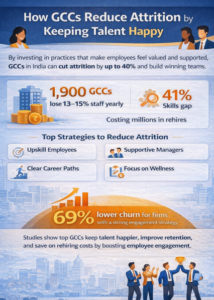
Attrition is one of the biggest challenges for GCCs in India today. This infographic shows how
smart HR strategies can make a real difference in keeping talent engaged and committed.
A strong talent strategy blends internal development with external hiring. While external
hiring helps close urgent gaps especially with 41% skill shortages in AI and cloud long-term
retention comes from building talent internally. Nearly 78% of top-performing GCCs run
structured upskilling academies, and employees who receive continuous learning
opportunities are 60% less likely to quit.
Manager quality directly impacts retention. Teams with trained people managers see up to
30% lower attrition. Many GCCs now link manager KPIs to engagement scores, retention
rates, and team growth, ensuring accountability. Wellness programs, realistic workloads, and
mental health support further reduce burnout driven exits
Setting up teams in tier-2 and tier-3 cities also helps. These locations offer lower living costs,
flexible hybrid work, and a better quality of life, which reduces attrition by 15–25%. For
graduates, this means faster career growth, recognised certifications, and clear career paths
without the pressure and expense of big metro cities
In simple terms, people stay where they grow, feel valued, and see a future. GCC HR teams
that combine purposeful roles, hybrid work, AI-led HR innovation, strong managers, and
continuous learning can realistically cut attrition by up to 40%—while building stronger,
future-ready organizations.