

Hybrid work in India’s GCCs blends office and home days to keep work productive while
supporting a better lifestyle. With 1,900 GCCs employing 1.9 million professionals and
growing at 18–20% every year, almost 95% of centers now use hybrid models to reduce 13–
15% attrition and access talent from tier-2 cities. What makes it work is structure, not
freedom without rules—many teams follow clear norms like three office days for
collaboration, role-based flexibility where analytics teams work remotely and lab or
engineering roles come onsite, and strong digital tools to stay connected with global teams.

A distributed-first mindset is becoming the new standard for GCCs in India. Instead of
designing work around office locations, companies now set location-independent goals, clear
global processes, and rely on asynchronous communication so remote employees can work
just as effectively as on-site teams.
GCCs proved this model works when they shifted to remote work in just 90 days during the
lockdowns, without major disruption. Today, many are extending this approach by adding
tier-2 city satellites and co-working hubs, which reduce commute stress and expand talent
pools by 8–9%. For graduates, this means more flexibility and access to global roles, while for
B2B leaders, it delivers resilience, scale, and consistent performance across locations.
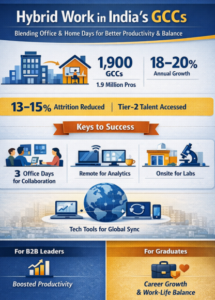
Hybrid work is no longer a trend it’s how India’s GCCs are scaling faster while keeping teams
productive and happy. This snapshot shows how the model really works on the ground.
Local empowerment works best when it is backed by strong HR innovation, clear talent
strategy, and smart use of AI and automation. Leading GCCs now ensure that India-based
leaders handle 60–70% of day-to-day decisions locally, reducing delays and speeding up
execution while staying aligned with global goals through structured governance and
leadership rotations.
From an HR innovation perspective, companies are redesigning how work gets done. Offices
are no longer built for attendance but for outcomes. Hybrid workplaces now include
collaboration zones, focus rooms, and digital-first workflows, helping teams perform better.
Studies show that nearly 80% of IT and GCC organizations continue with hybrid models, and
this shift has helped reduce attrition by 10–15% in competitive talent markets.
Companies keep hybrid work effective by tracking engagement scores, productivity KPIs,
and attrition rates instead of just attendance. Wellness programs help reduce burnout, while
fixed anchor days in the office encourage collaboration and fresh ideas. Time-zone challenges
are managed through overlap hours and trust-based flexibility, allowing teams to work
smoothly without micromanagement. For graduates, this creates an inclusive and supportive
work environment where they can grow and feel valued. For leaders, it means lower costs,
access to a wider talent pool, and stronger performance.