

Many CHROs( Chief Human Resources Officer) make a common mistake when building teams in India
they still see GCCs as low-cost back offices instead of strategic growth centers. Today, India has
over 1,900 GCCs employing nearly 1.9 million professionals, growing at 18–20% every year. When
leaders limit these teams to low-value work, it often leads to high churn attrition can touch 25% and
big innovation opportunities are lost. Smarter leaders do it differently. They treat India as a true partner
from day one, giving teams full ownership of work like AI, cloud, and digital products.

Many CHROs rush hires through vendors to fill seats fast, but end up with workers great at daily
operations yet lacking big-picture vision for real innovation. They skip tough screening to save time,
building teams strong on compliance but weak on strategy—leaving benches unable to drive GCCs
toward high-value AI projects or bold growth. Then weak onboarding turns quick fills into chaos, as
new joins struggle without clear guidance.
Unclear job descriptions also hurt growth. Phrases like “drive transformation” sound exciting but don’t
explain real work. By month three, this leads to confusion and frustration. Honest and clear job
descriptions that match the actual role attract the right people and help teams perform better from
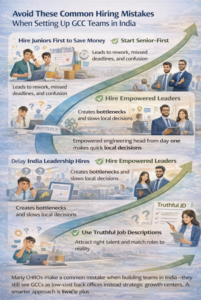
the start.CHROs often stumble building India GCC teams—junior-first hires and vague JDs create chaos. This
infographic reveals 3 critical fixes for fast, strategic ramps.
Weak infrastructure like poor IT systems, slow internet, or weak cybersecurity can kill momentum
and slow down everything a team is trying to achieve. When headquarters micromanages without
understanding the local team, it creates frustration and disengagement, making people feel
disconnected. Without clear goals or governance KPIs, it’s hard to measure if work is actually creating
value. On the other hand, inclusive leaders, team-building activities, and shared OKRs help bridge
gaps and align everyone.
In simple terms, Smart CHROs don’t rush hires through vendors. They build strong teams with good
checks and helpful onboarding so everyone starts well. They watch simple signs like if managers are
happy, who quits early, and if people accept job offers. This catches problems fast. They also change
global HR rules to fit India’s job world, hybrid work, and what graduates want clear help and fun career
paths in growing GCCs.