

The workplace landscape is experiencing a massive transformation in how global enterprises recruit
and build capabilities. For decades, Global Capability Centers, commonly known as GCCs, relied on
traditional talent pools. HR teams sifted through databases, posted job descriptions, and engaged in
fierce compensation wars in major tech hubs. However, standard talent sourcing is no longer enough to
support rapid digital scale.Today, forward-thinking enterprise leaders and HR tech startups are shifting
their focus toward building interconnected talent ecosystems.
To understand this shift, it helps to look at the market signals. India has emerged as the global
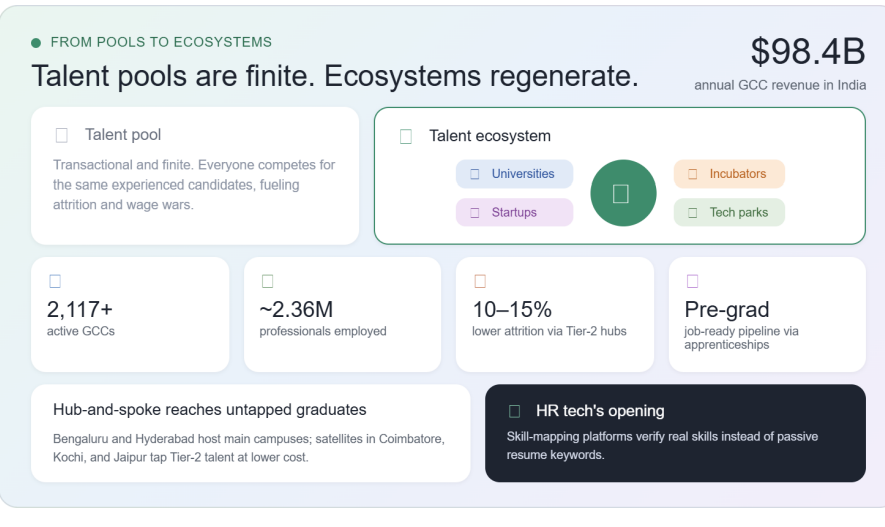
centerpiece of this movement, now hosting over 2,117 active GCCs that employ approximately 2.36
million professionals and generate $98.4 billion in annual revenue. As these centers evolve from
transactional back-office operations into strategic innovation hubs, relying on static talent pools causes
high attrition rates and unsustainable wage inflation. A talent pool is transactional and finite, whereas a
talent ecosystem is collaborative and continuously regenerating.

This transition represents future-of-work thinking in action. Instead of competing for the same pool of
experienced candidates, GCCs are partnering with universities, early-stage startups, research
incubators, and local tech parks. By engaging early with academic institutions, enterprises help shape
degree curricula, sponsor specialized engineering labs, and run structured apprenticeship models.
The rapid rise of AI and automation has accelerated this trend. Modern enterprises no longer search for
broad technical profiles; they require niche expertise in generative AI, autonomous agent design, and
enterprise cloud architecture. Building these advanced capabilities internally takes time, and hiring
them individually is expensive. By tapping into startup ecosystems through corporate incubators and
sandboxes, GCCs can co-create enterprise solutions while gaining direct access to specialized tech
talent. HR startups play a crucial role here by building skill-mapping platforms that evaluate candidates
based on verified skills rather than passive resume keywords.
For HR startups, founders, and recent graduates, the rise of talent ecosystems offers exciting new
opportunities. For graduates, it means smoother transitions from campus to high-impact enterprise
roles with clearer career paths. For HR leaders and B2B platforms, the mission is clear: move away
from reactive hiring and focus on building connected, long-term talent networks. Positioning your
organization inside a thriving talent ecosystem converts hiring from an ongoing operational headache
into a durable competitive advantage.
Policy incentives and economic signals are also reshaping talent strategy across regions. Favorable
state policies, government-backed startup missions, and expanding digital infrastructure have
encouraged companies to adopt a hub-and-spoke geographic model.While primary tech hubs like
Bengaluru and Hyderabad host main enterprise campuses, GCCs are opening satellite centers in Tier2 innovation corridors like Coimbatore, Kochi, and Jaipur.This regional strategy opens up untapped
graduate talent pools, lowers operational costs, and delivers 10% to 15% lower voluntary attrition
rates.